
Sometime ago AOCA (Argentine Congress Organizers Association) invited me to lecture on the “Conventions Bureaus´ Economic Sustainability”, and to talk about the “Rom Fee” experience, which is the voluntary contribution of those tourists staying at hotels which are members of the Salta Convention & Visitors Bureau, (wrongly named Room Tax, as there is no such tax in Salta).
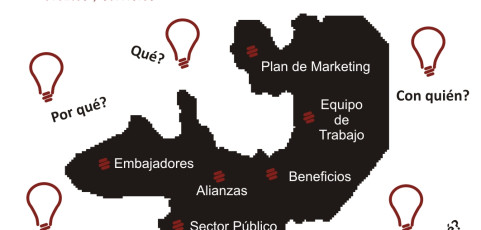
As stated there: THE MOST IMPORTANT THING to work on “the self-sustainability” is to know the answers to: what is it? What is it for? Why? How? etc.
Marketing Plan
In this way is that we first organized the Saltas´s FODA (Strengths; Opportunities; Weaknesses and Threats)as a business tourism destination, we invited professionals on the area to be part of the team work, we shared our visions and vocation for the developing of the business tourism industry in Salta, and that is how we got to the following: the design of an specific Marketing Plan ( made by an international expertise) which development meant the creation of a team which would professionally fulfil the processes and would invest time in each set out Annual Program.
Room Fee
Already on the way of finding appropriate economic resources to ensure the sustained development of Salta´s business tourism Marketing Plan, is that we readjusted the international Room Tax prototype and introduced the “tourist’s voluntary contribution” as a tool for self-sustainability (Room Fee).
Room Tax
It is also worthy mention that we found some inconveniences when evaluating that “potential disadvantage” that would appear given such tax collection would turn into a lien (by a provincial or national politic decision). Neither did it escape our analysis that it did happen in: touristic CITIES par excellence and of GREAT CIVIC CONCIENSE regarding tax payment (and sensitivity for its social impact); cities like Rome, Venice, Florence, London, New York, etc.; which average annual activity declared to the IRS surpasses the 80%). If that would be our country´s annual average I guess no hotel business man or institutions that represent them would stop to think about philosophical or conceptual interpretations on that subject.
Competitive Advantage
We understand that Room Fee is a valid tool in a conceptual and in an operative way, and still more than that! As a destination it gives us a competitive advantage: each tourist staying at hotels which are members of the SCVB gets a benefits card (where they stay the voluntary payment and provide important discounts in different commerce, gastronomic and entertainment), and so at the end of their stay the tourists not only have paid the Room Fee but also valued their benefits card.
TOP 10 Destinations
Looking the annual results in events number we see an average annual growth of 12% (2009-2013) which indicates that Business Tourism industry has not only established itself in Salta (placing it between the top 10 of the country) but also it found its way to promote itself as a competitive key sector in tourism economy.
Benefits for everyone (7);
When a venue city positions itself in Business Tourism (be it as a main city or a complementary one) it means, therefore, that it has produced benefits for the destination that have transcend the specific section and the touristic sector as a whole to contribute to a better community life quality. Benefits:
1) A break in the seasonal nature of holiday’s tourism: favoring a better use of the Hotels Infrastructure.
2) Socio-academic updating of local professional sectors.
3) Source of employment.
4) Improvement in the provided quality service standards.
5) Strategic alliances and inter- institutional provincial, local, national and international Strengthening.
6) Economic benefits for the destination, (such as mentioned in item b.)
Benefits in the sector
A.-Stay and average expense
Regarding this subject it is worthy mention that the attendee to a national conference has an average stay of 2,7 days spending twice what a holiday tourist spends, while if it is an international conference the average is 4,5 stay and the attendee spends almost 4,5 times more in the destination.
b.- Expense distribution
- Gastronomy and accommodation (worth mentioning that around 55% of the total expense per capita is destined to accommodation and gastronomic services)
- Conference room (conference rooms in town center, Universities, Institutions and/or Associations headquarters and Convention Center)
- Service providers (airline tickets, technology, merchandising, graphic material, multimedia, broadcasting in mainstream media and specialized areas, cafeteria service, catering reception, human resources, hall hostess, announcer, etc-. Signposting, security, credentials area and event organizer.
- Purchasing and Excursions
More TOURISM
7) The most IMPORTANT and UNARGUABLE benefit that Business Tourism produces is that events and conferences are holiday tourism main promoters. 48% of those who attended an event or conference RETURN to the destination with their families on holidays. (Taking into account that they are high purchasing power tourists; we may assert that this touristic sector -BUSINESS TOURISM- becomes one of the sectors that generates grater incomes in the destination, such as delegates in a conference and tourists- before or after the event or when the tourist comes back with his family-).
CONCLUSION
Aware of the world´s constant and dramatic transformation, with a strong sense of vocation to keep encouraging not only Business Tourism growth but also the growth of the touristic sector as a whole in my province and our country, is that I celebrate and will always celebrate the diversity of opinions: especially if its contribution aims to the supportive development of a federal Argentina!!
Soledad Urtubey
General Director
Sol del Norte Eventos
RSE Expo Solidaria

